Crowned snake (Tantilla) phylogenomics in the southeastern United States
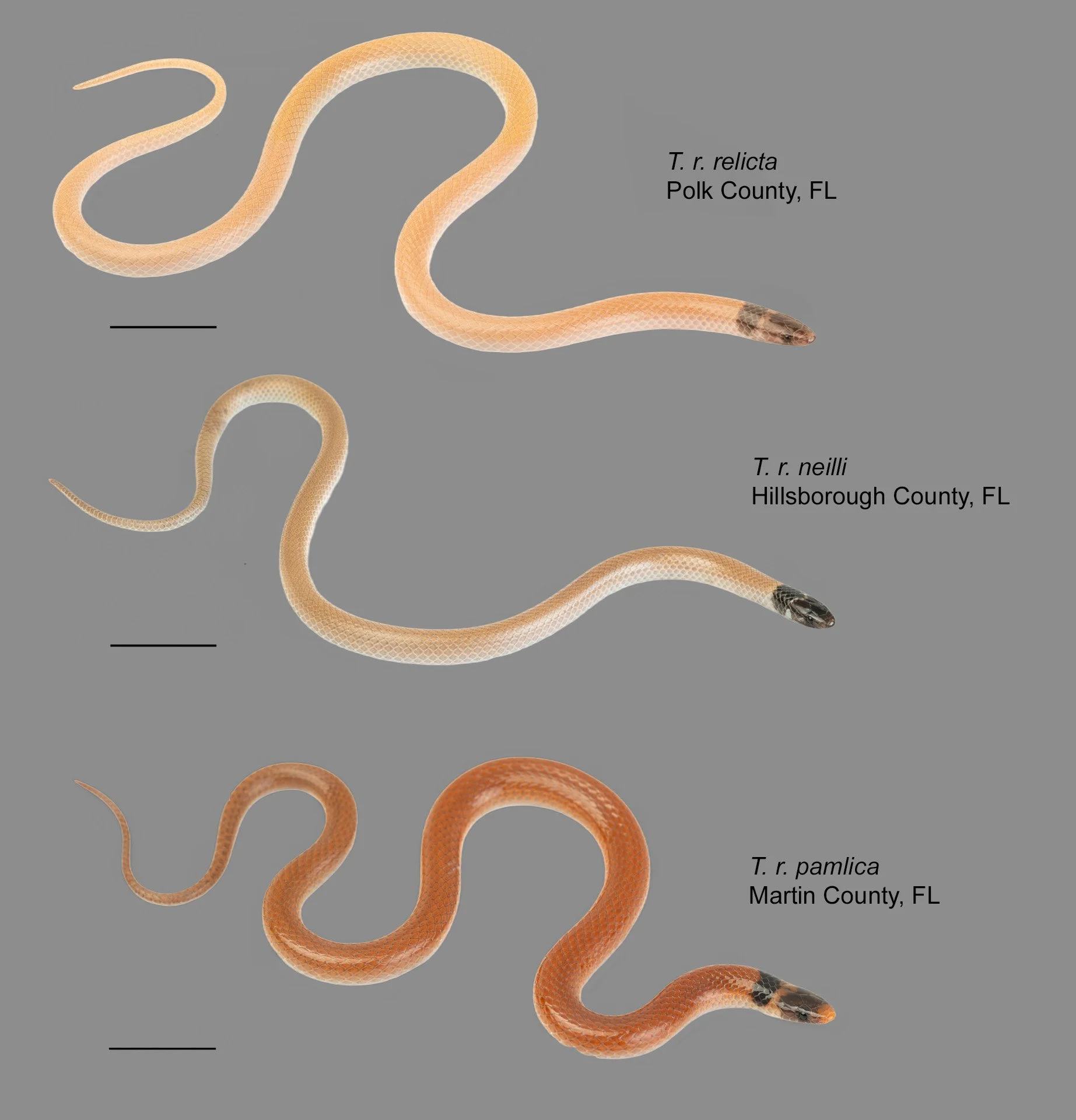
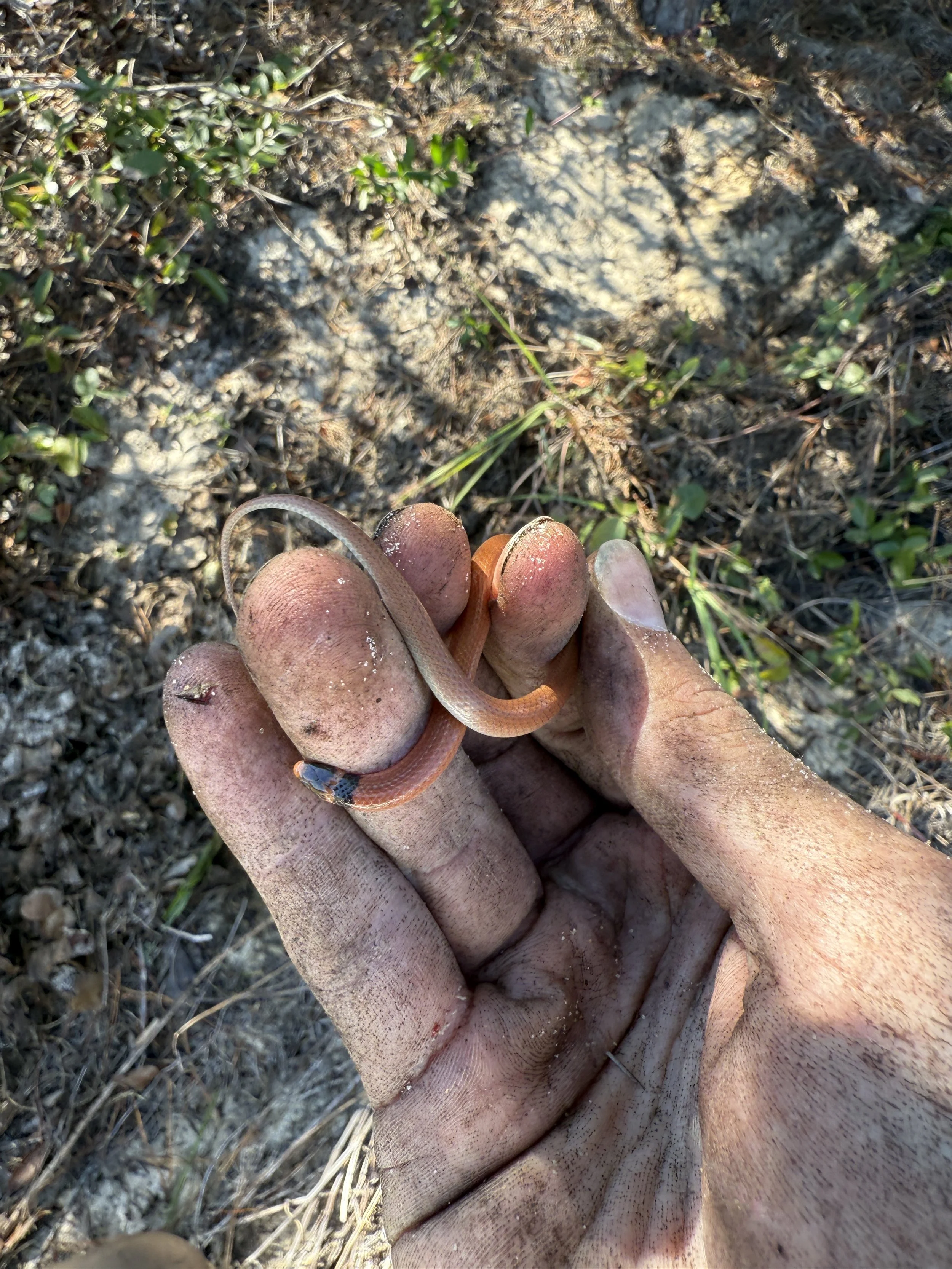
At the Florida Museum of Natural History, along with collaborators at the Smithsonian, we are working to resolve the taxonomy of the southeastern crowned snakes (Tantilla)—a group of fossorial, centipede-eating snakes native to the southeastern United States.
Our analyses suggest that traditional, morphology-based classifications do not closely reflect patterns of genetic structure. We are using genome-wide sequencing data to investigate patterns of divergence, test species boundaries, and establish a well-supported taxonomy. By placing these genetic patterns in a historical context, we also hope to understand how isolation and gene flow shaped the diversity of Tantilla in the region.
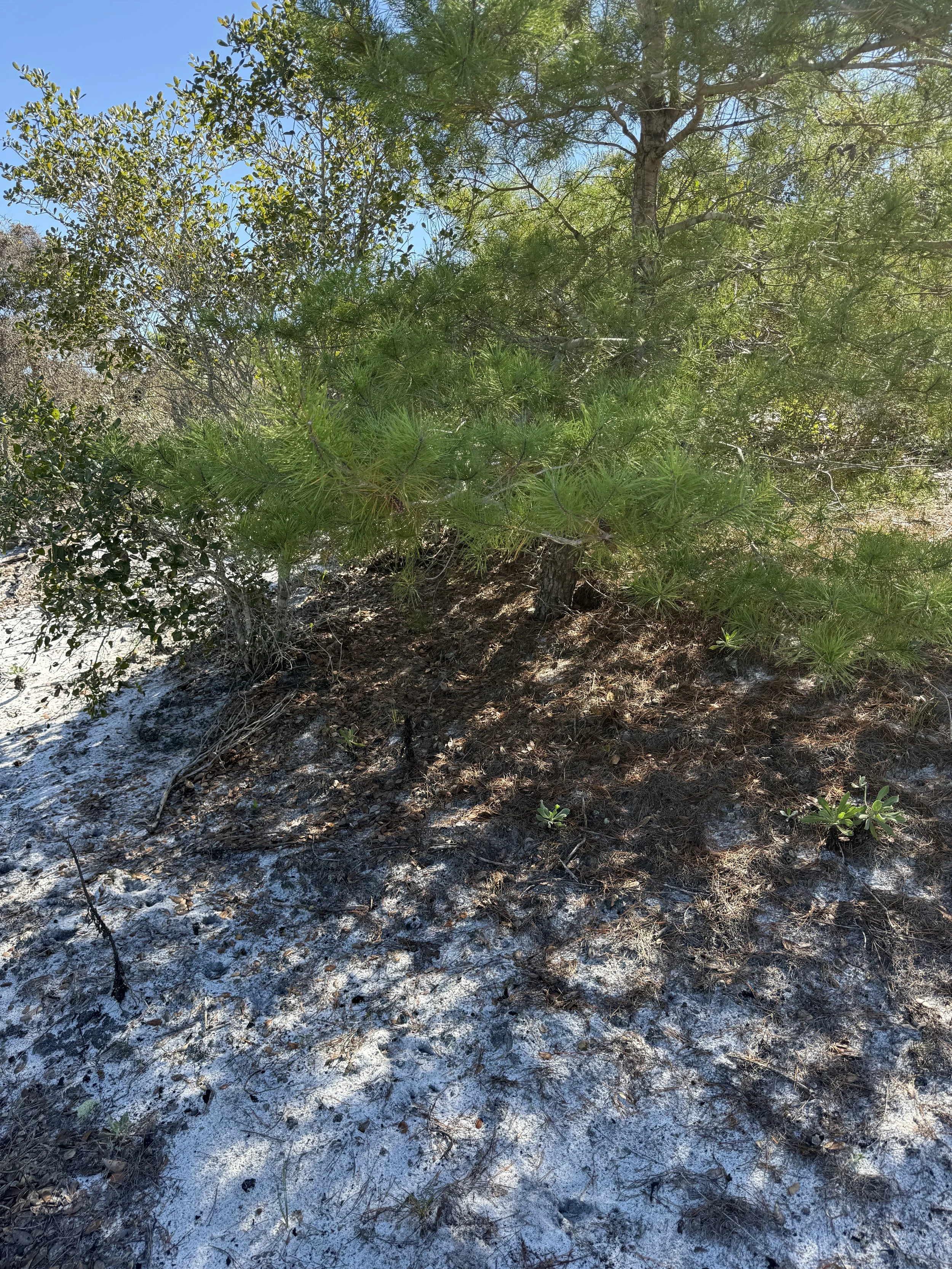
This project has involved countless hours of fieldwork to address sampling gaps across Florida and adjacent states. Collecting Tantilla can be difficult, and when there’s little cover (i.e., rocks and logs), we often resort to digging in the sand. It’s a tedious but rewarding process, and it gives us the opportunity to encounter other secretive psammophilic species, like mole skinks (Plestiodon egregius). The fieldwork photos show some of what goes into finding these snakes and building the dataset behind the project.
In collaboration with Nanjing Forestry University and Chinese Institude of Zoology, I have worked on multiple projects advancing our understanding of China’s herpetofauna. Through extensive fieldwork, I have helped collect putative new species of Megophryid frogs and Natricine snakes, find province-level distribution records for hynobiid salamanders, and collect specimens of other rarely documented species of snakes and salamanders. More recently, this work has been centered around collecting pitvipers (primarily Gloydius) from across the country for phylogenomic work. I have also had the opportunity to photograph species, particularly salamanders, that previously lacked diagnostic photographs in life. Fieldwork in China presents unique logistical challenges, but these challenges only make the work more rewarding.
Chinese Herpetology
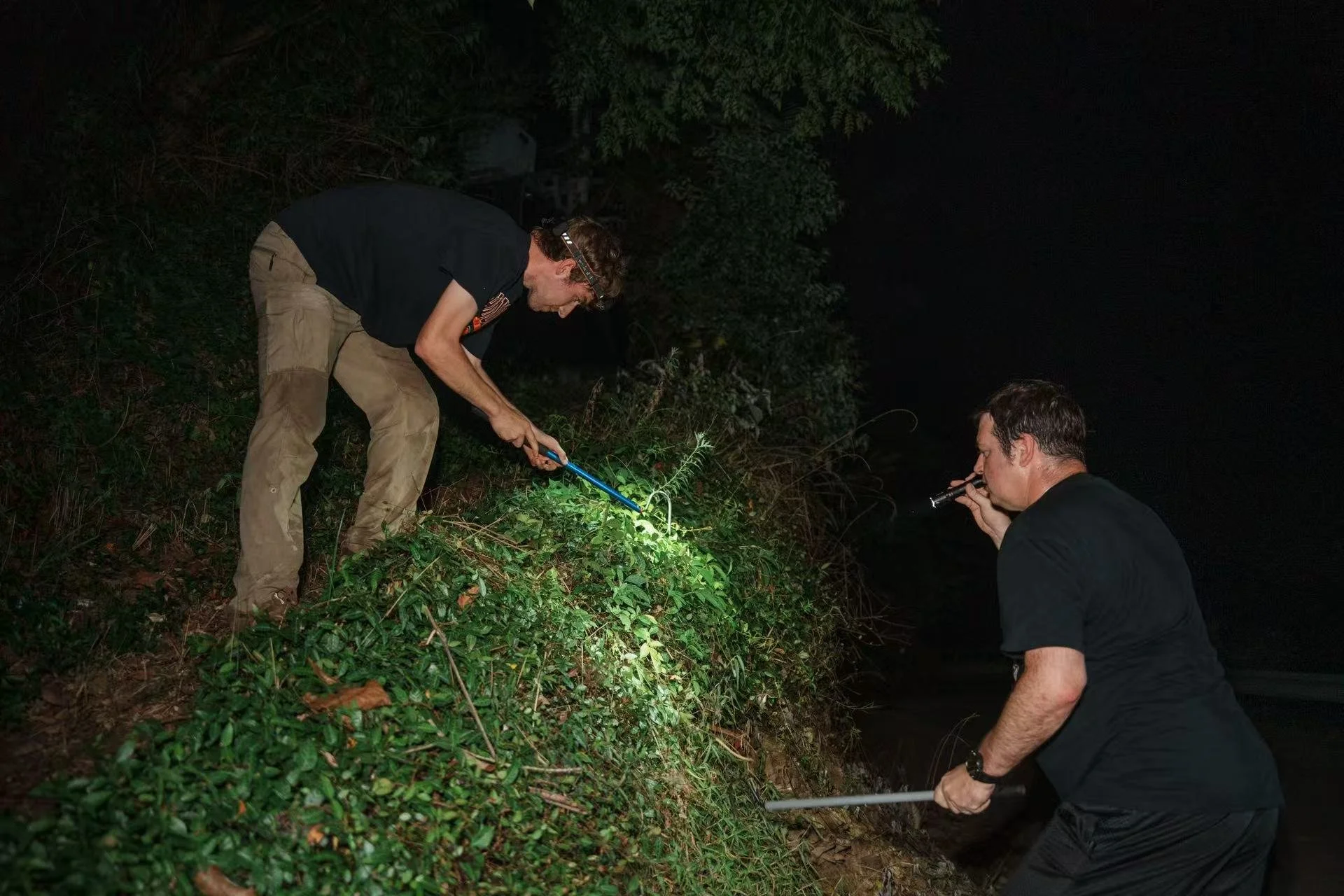
Tracking down a short-tailed mamushi (Gloydius brevicauda) that escaped into thick vegetation
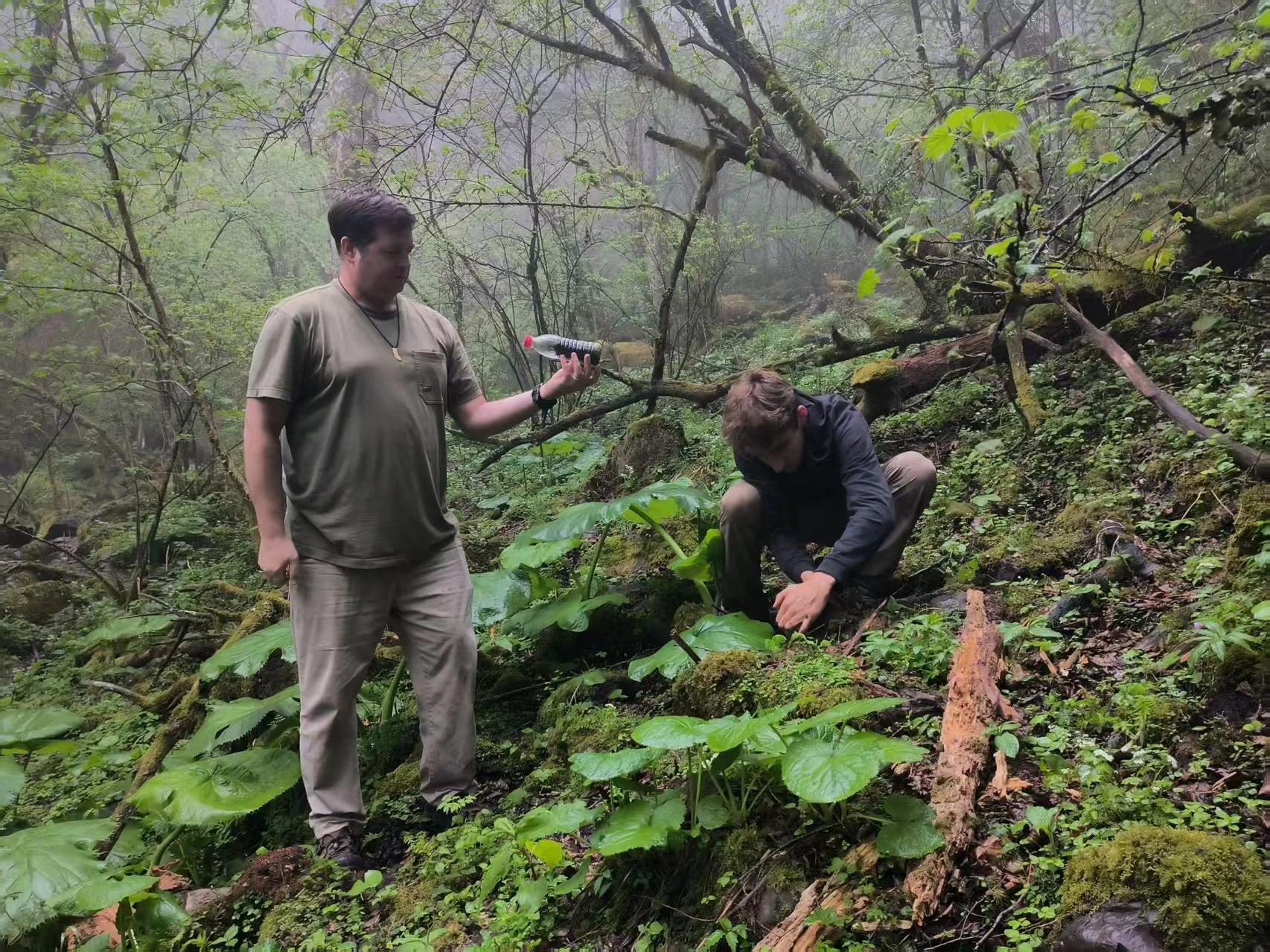
Collecting Hynobiid salamanders in western China
See more photos from other chinese projects here:
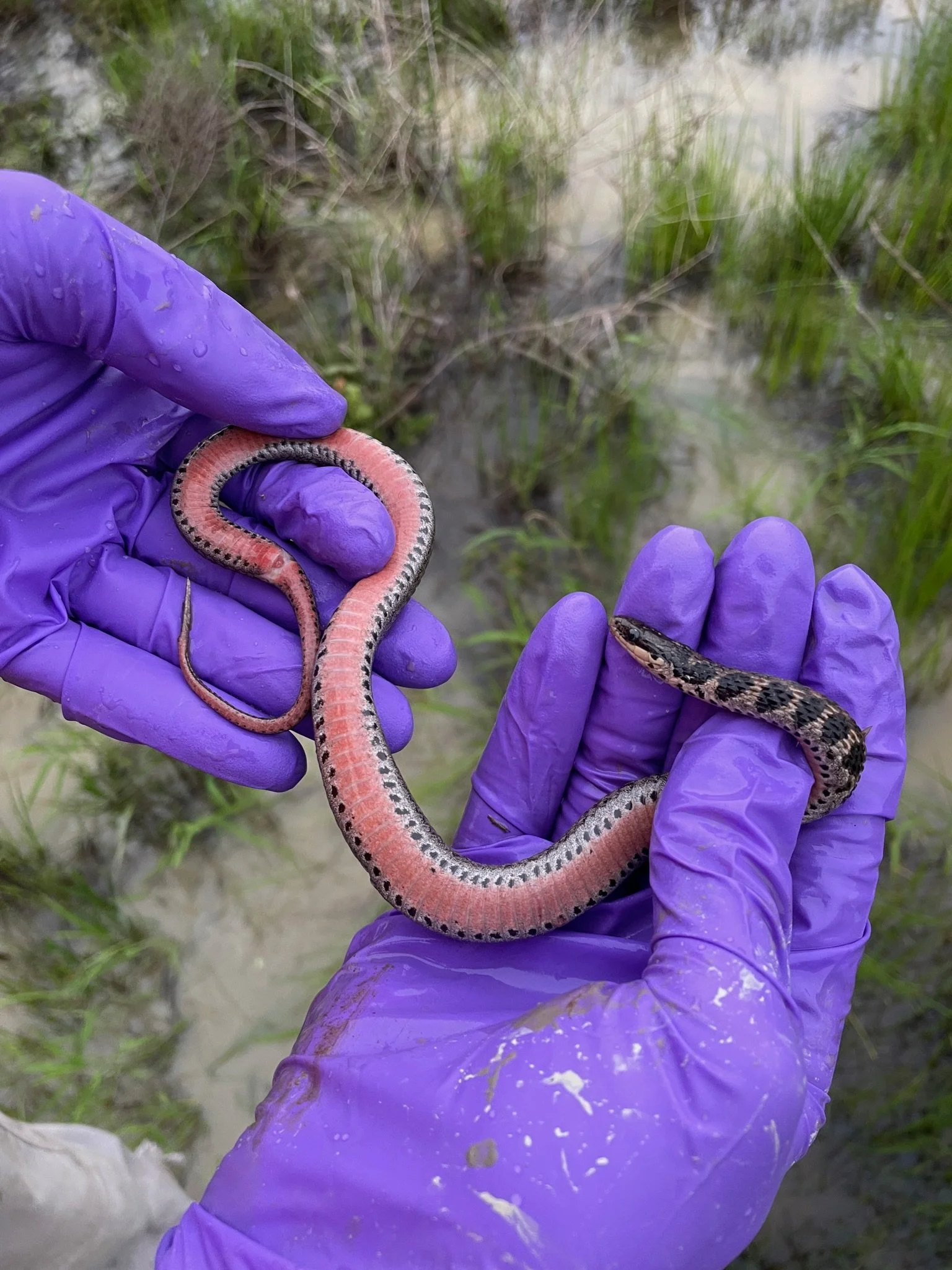
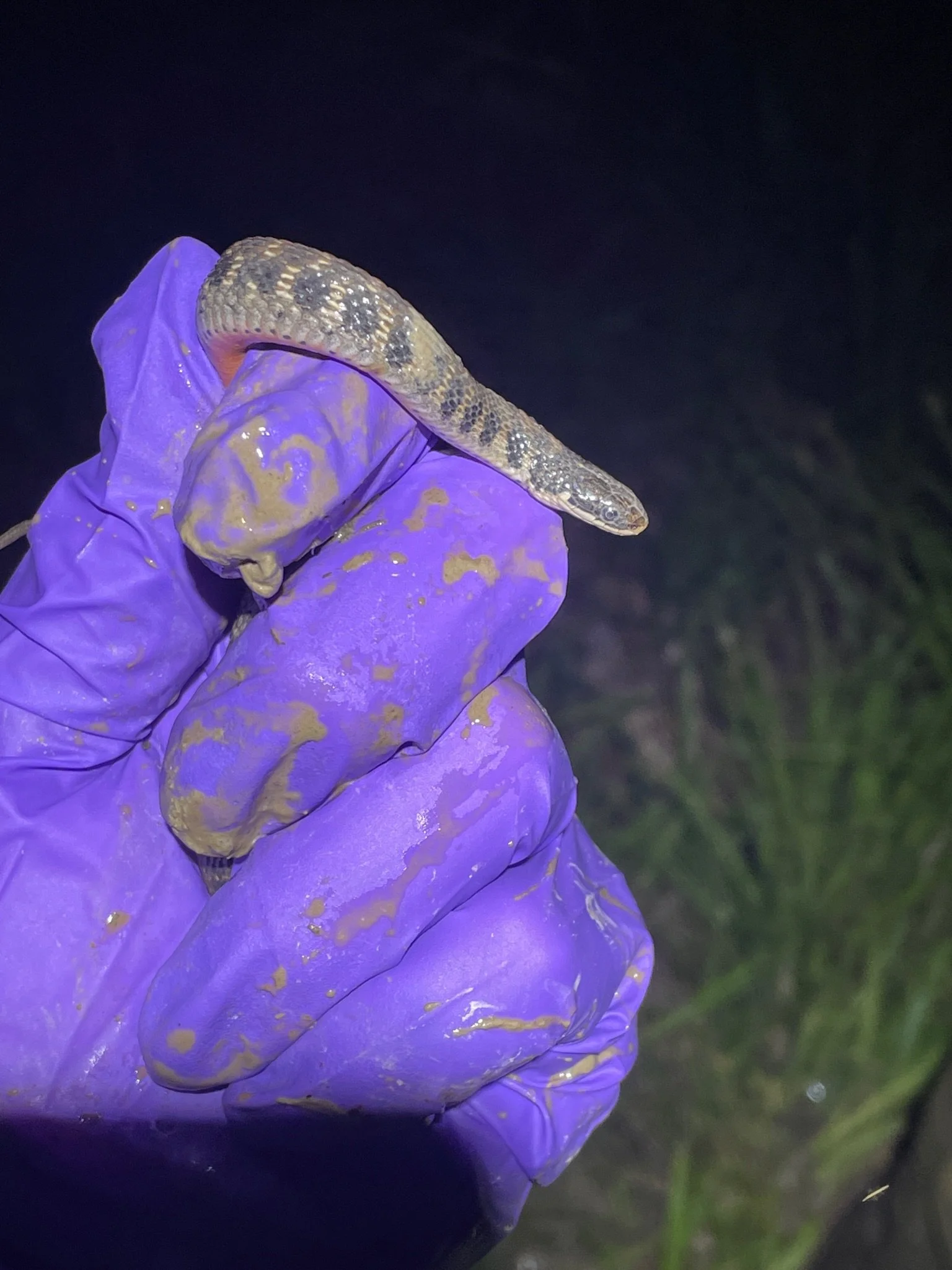
Snake fungal disease in endangered Kirtland’s Snakes (Clonophis kirtlandii)
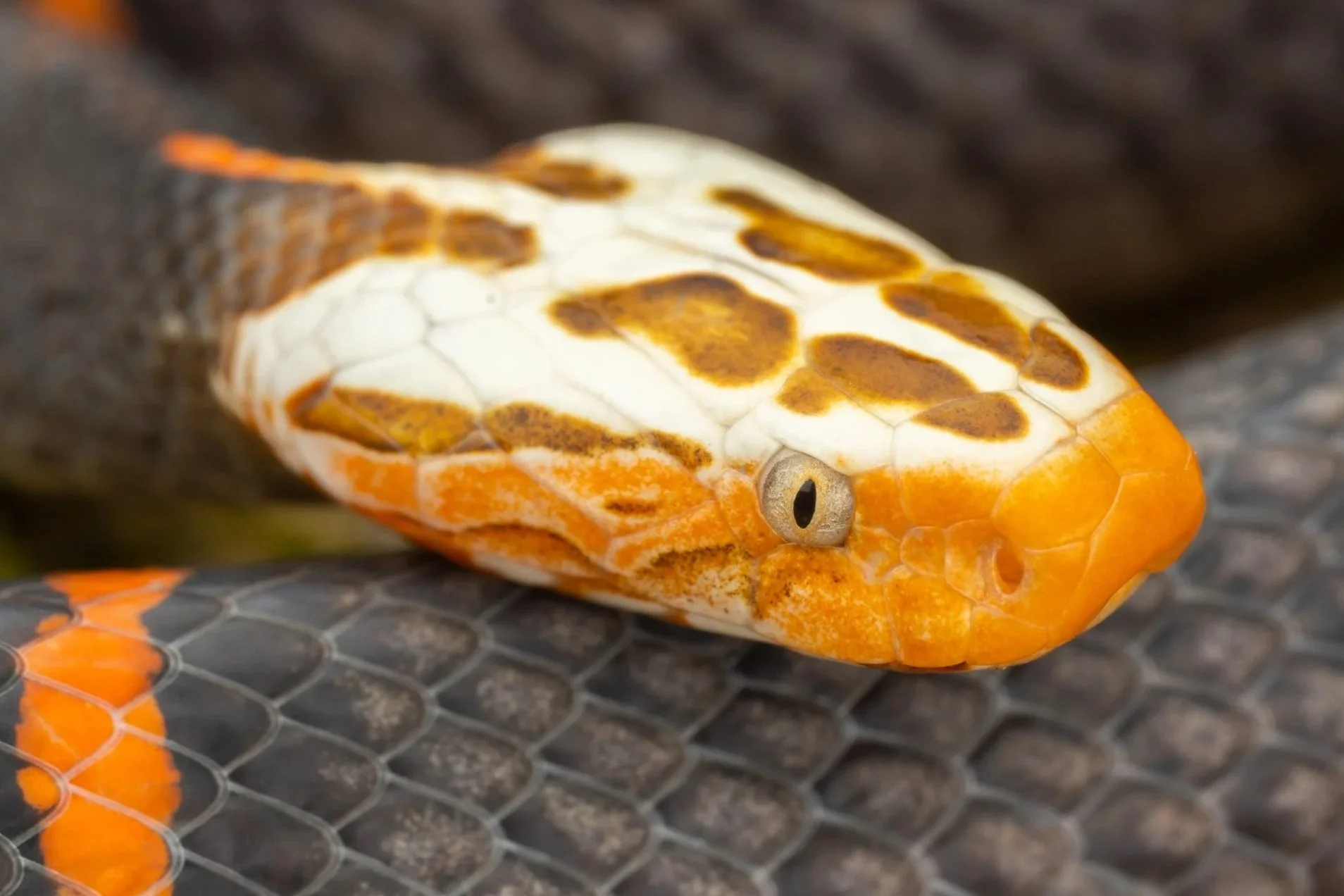
During my time in Indiana, I collaborated with the Indiana Department of Natural Resources and Dr. Drew Davis to sample Kirtland’s Snakes (Clonophis kirtlandii) for the fungus that causes snake fungal disease (Ophidiomyces ophidiicola). During the course of this project, we also collected genetic samples from all individuals and discovered new distribution records for C. kirtlandii, a species that is endangered throughout its distribution.